
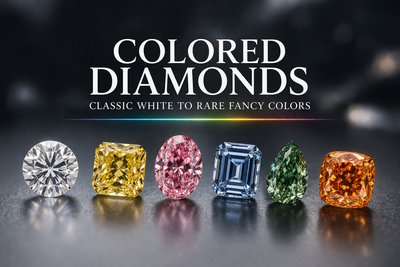
Colored Diamonds: From Classic White to Rare Fancy Colors
Gallery Gems on 6th Apr 2026
Diamonds are often associated with crisp, icy brilliance—but in reality, they exist in a full spectrum of colors. From perfectly colorless stones to vivid pinks, blues, and greens, diamonds are one of the most fascinating gemstones in the world.
At Gallery Gems, we believe that understanding why diamonds have color makes them even more meaningful. Whether you're exploring classic white diamonds or rare fancy colors, this guide breaks it all down in a way that’s both educational and easy to enjoy.
The Classic Standard: Colorless (White) Diamonds
Most traditional diamonds fall within the GIA D–Z color scale, which measures how colorless a diamond appears.
- D–F: Colorless (bright, icy white)
- G–J: Near colorless (excellent value with minimal warmth)
- K–Z: Noticeable warmth (yellow or brown tint)
What Makes a Diamond Colorless?
A pure diamond is made of carbon atoms in a perfectly arranged crystal lattice. When this structure is uninterrupted, light passes through cleanly—creating that signature white brilliance.
Even slight changes in that structure can introduce color—and that’s where diamonds become truly unique.
What Causes Color in Diamonds?
Colored diamonds are formed when trace elements or structural changes occur during crystal growth deep within the Earth.
Key Causes of Diamond Color
- Nitrogen → Yellow to Orange
- Boron → Blue
- Natural Radiation → Green
- Crystal Distortion (Pressure) → Pink, Red, Purple
- Hydrogen → Violet tones
These changes happen at the atomic level, meaning the color is part of the diamond itself—not just surface deep.
Natural Fancy Colored Diamonds
When a diamond’s color becomes strong enough, it moves beyond the traditional scale and is classified as a:
Fancy Colored Diamond
These diamonds are graded based on:
- Hue – the actual color
- Tone – light or dark appearance
- Saturation – intensity of the color
Common Natural Fancy Colors
- Yellow (most common)
- Champagne and Cognac (brown spectrum)
- Pink
- Blue
- Green
- Orange
- Red (extremely rare)
Understanding Fancy Color Grading
Fancy colored diamonds use a completely different grading system than white diamonds.
Intensity Levels
- Fancy Light
- Fancy
- Fancy Intense
- Fancy Vivid (top tier)
- Fancy Deep / Fancy Dark
A Fancy Vivid Pink or Blue diamond represents some of the highest-value gemstones in the world due to their rarity and saturation.
Famous Origins of Colored Diamonds
Certain locations are known for producing specific types of diamonds:
- South Africa – Classic white and yellow diamonds
- Botswana – High-quality colorless stones
- Australia (Argyle Mine) – Legendary pink diamonds
- India (Golconda) – Historic ultra-pure diamonds
- Brazil – Occasional rare colors including green and blue
The closure of the Argyle Mine has made natural pink diamonds significantly more rare and collectible.
Treated Colored Diamonds (Irradiated & HPHT)
Not all colored diamonds are natural—and that’s completely fine when properly disclosed.
Common Diamond Treatments
Irradiation
- Produces green, blue, or black diamonds
- Often followed by heat treatment to stabilize color
HPHT (High Pressure High Temperature)
- Can enhance or alter color
- Commonly used to remove brown tones or create fancy hues
Are Treated Diamonds Real?
Yes—treated diamonds are 100% real diamonds, just with enhanced color.
They offer a more affordable way to enjoy vibrant diamond colors.
Lab-Grown Colored Diamonds
Lab-grown diamonds can also be created in a wide range of colors.
- Same chemical structure as natural diamonds
- Often display strong, vivid color
- More accessible pricing
For clients who want bold color without the rarity pricing, lab-grown diamonds are an excellent option.
High-End Diamond Terminology Explained
When shopping for colored diamonds, you’ll encounter specific terms:
- Fancy Vivid – highest saturation and brightness
- Pure Hue – no secondary color tones
- Modified Color – includes slight secondary hues (e.g., purplish pink)
- Type IIa Diamonds – extremely pure diamonds, often associated with exceptional quality
Understanding these terms helps you identify true high-end stones.
Are Colored Diamonds More Valuable?
Value depends on rarity and intensity.
- Colorless diamonds → value based on clarity, cut, and size
- Fancy colored diamonds → value driven primarily by color
Examples:
- Fancy Light Yellow → often affordable
- Fancy Vivid Blue or Pink → extremely rare and valuable
Choosing the Right Diamond
There’s no one-size-fits-all answer—just what fits your style:
- Timeless and classic: Colorless diamonds (D–H range)
- Warm and unique: Champagne or yellow diamonds
- Bold and rare: Fancy colored diamonds
- Vibrant and budget-friendly: Treated or lab-grown diamonds
At Gallery Gems, every diamond is selected with both gemological expertise and a strong focus on real-world wearability.
The Gallery Gems Perspective
Diamonds are more than brilliance—they’re a reflection of their origin, structure, and rarity.
A colorless diamond represents precision and purity.
A colored diamond tells a deeper story—of trace elements, pressure, and time.
Whether you're exploring a classic engagement ring or a unique colored diamond piece, understanding these details allows you to choose with confidence.
FAQ: Colored Diamonds
Are colored diamonds natural?
Yes, many colored diamonds occur naturally. Others may be treated or lab-grown, and proper disclosure is essential.
What is a fancy colored diamond?
A diamond with strong visible color that is graded outside the standard D–Z color scale.
What is the rarest diamond color?
Red diamonds are the rarest, followed by blue and pink.
Are colored diamonds good for engagement rings?
Absolutely. Colored diamond engagement rings offer a unique and personal alternative to traditional white diamonds.
Are treated diamonds worth buying?
Yes—treated diamonds are real diamonds and can offer excellent value when clearly disclosed.