Valentine’s Gemstones: Soft Love, Dark Love & the Gemstones of Lust
Gallery Gems on 6th Feb 2026
Valentine’s Day gets marketed like love is one emotion.
Soft pink. Sweet hearts. Safe romance.
But real love is not one mood. It is a spectrum.
Sometimes it is gentle and healing. Sometimes it is obsessive. Sometimes it is the kind of passion that wrecks your sleep, overrides your judgment, and makes you reach for someone you swore you were done with.
Gemstones have always understood this better than people do.
Because love is not just romance. It is loyalty. Temptation. Devotion. Heat. Chaos. Self-worth. The slow burn and the wildfire.
And the right gemstone does not just look beautiful. It reflects the truth about what kind of love you are actually dealing with.
This is not a “top Valentine’s gemstones” list.
This is the JTVON breakdown of love’s real categories:
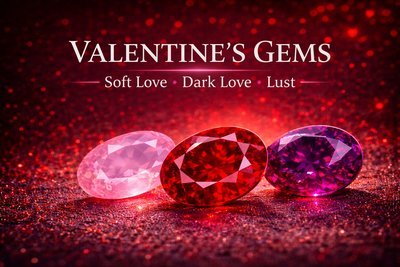
Soft love. Dark love. And the gemstones of lust.
Soft Love: The Gentle, Golden Kind
Soft love is not boring. It is rare.
It is the kind of love that does not demand a performance. It does not come with power games or emotional debt. It shows up, stays steady, and feels safe without feeling dull.
These are the stones for the romantics, the healers, the sweethearts, and the people learning how to love themselves without apology.
Rose Quartz: The Stone Everyone Thinks They Know
Rose quartz is the most famous love gemstone in the world, and that alone means something.
It is the soft pink stone that became a universal symbol of tenderness, self-love, and emotional healing. But it did not earn that reputation because it was trendy. It earned it because its color hits something immediate and human. A warm blush tone that feels vulnerable, familiar, and real.
Unlike gemstones that demand attention, rose quartz does not compete for it.
That is the point.
Rose quartz is the kind of love that does not need to prove itself. It is the “I’m here” kind of love. The “I forgive you” kind of love. The “I choose peace” kind of love.
It is also one of the best gemstones for anyone who wants romantic symbolism without looking like they are trying too hard.
Soft love does not sparkle.
It glows.
Morganite: The Bridal Stone That Feels Like Champagne Romance
If rose quartz is love in its purest form, morganite is love dressed up.
Morganite is a member of the beryl family, alongside emerald and aquamarine, but instead of green or blue, it blooms in soft peach, blush, and warm pink tones that feel refined without feeling cold.
This is the stone of modern bridal jewelry, quiet luxury, and romance that feels intentional rather than performative.
Morganite carries the energy of:
-
engagement rings that feel feminine but current
-
elegance without excess
-
warmth without sentimentality
-
confidence that does not need a diamond to make its point
It does not burn like ruby. It does not haunt like garnet. It does not overwhelm.
Morganite feels warm, graceful, and composed. The best material has a glow that looks almost candlelit, like love that feels safe but still unmistakably alive.
Morganite is the gemstone version of a slow dance in a room that smells like champagne.
Dark Love: The Obsession, The Devotion, The “I’d Do It Again” Kind
Not all love is gentle.
Some love is deep. Heavy. Intense. The kind that does not fade. The kind that survives distance, betrayal, time, or temptation. The kind that changes the way you think.
Dark love is not necessarily unhealthy. It is simply serious.
These stones are not pastel. They are saturated, rich, and unforgettable.
They are the gemstones you do not get over quickly.
Rhodolite Garnet: The Seduction Stone Nobody Talks About
Rhodolite is one of the most underrated romantic gemstones in fine jewelry.
It lives in that dangerous space between raspberry red and purple wine, a color that feels sensual, mysterious, and expensive in a way most people do not expect from garnet.
It is darker than pink tourmaline, often richer than commercial ruby, and usually cleaner than buyers assume a garnet can be.
Rhodolite is not the “first crush” gemstone.
It is the after-midnight gemstone.
It is the color of:
-
red wine
-
velvet lipstick
-
candlelight
-
temptation you pretend not to feel
And that is the real secret of rhodolite. It often delivers a luxury look without luxury pricing. People who know gemstones know exactly how good it can be.
Rhodolite does not scream love.
It smolders.
Garnet: Love That Bleeds, Love That Protects
Garnet is ancient.
Not ancient in a decorative sense. Ancient in the sense that people wore it before modern civilization had polished language for half the things it feared.
In older texts, garnet was often described as carbuncle, a glowing red stone believed to carry internal fire. Across cultures, garnet became associated with blood, protection, loyalty, and survival. It was not worn just because it looked beautiful. It was worn because it meant something.
That symbolism was never random.
Garnet’s deep red is the color of commitment, sacrifice, and devotion that does not break easily.
This is the gemstone of ride-or-die love. The “I am not leaving” kind of love. The “I will defend you” kind of love.
And unlike softer romantic stones, garnet has weight. It feels serious. It feels old. It feels binding.
Garnet is not a Valentine cliché.
It is a Valentine warning.
The Gemstones of Lust: Heat, Power & Dangerous Passion
Some gemstones do not symbolize love.
They symbolize desire.
These are the stones that do not whisper, do not soften, and do not wait.
They ignite.
Ruby: The Gemstone of Kings, War, and Dangerous Desire
Ruby has never been a passive gemstone.
Throughout history it belonged to emperors, warriors, and royal bloodlines because people believed it carried life force itself, a living fire trapped in crystal.
That is why ruby has always occupied a different category than other red stones.
It is not the gemstone you give because you “like” someone.
It is the gemstone you choose when you want the message to be unmistakable:
I choose you, and I am not subtle about it.
Ruby is not merely romantic.
It is commanding.
It is love with power behind it.
Fire Opal: The Gemstone That Burns First and Asks Questions Later
Fire opal is not simply orange.
The best fire opal looks like it came out of a furnace and somehow held its shape. Its color moves through molten sunset orange, ember red, blood-orange, and cherry heat.
Some stones push close to true red, and those are the ones that feel less warm than dangerous.
This is not soft romance.
This is attraction with momentum.
Fire opal is the gemstone equivalent of:
-
a charged look across a room
-
a first kiss that goes too far
-
desire that does not wait for permission
-
chemistry that feels like risk
Unlike gentler pink stones, fire opal does not symbolize comfort.
It symbolizes pure reaction.
The kind of connection that makes your pulse outrun your judgment. The kind you remember years later because it did not behave politely.
If ruby is royal obsession, fire opal is raw desire.
It looks like it is still on fire.
Why These Stones Work for Valentine’s Day
Most Valentine’s jewelry is marketed through one narrow emotional lens: sweetness.
But the best gemstone storytelling acknowledges that love is not a single shade of pink.
Some people want softness. Some want depth. Some want tension, intensity, and heat. The strength of a gemstone lies in how honestly it reflects the emotional tone behind the gift.
That is what makes these stones work:
-
Rose quartz for tenderness and emotional openness
-
Morganite for refined romance and modern bridal warmth
-
Rhodolite garnet for intimacy and quiet seduction
-
Garnet for loyalty, permanence, and devotion
-
Ruby for bold declaration and power
-
Fire opal for chemistry, urgency, and dangerous attraction
JTVON: Valentine’s Stones, But Honest
At JTVON, we do not reduce gemstones to fantasy slogans.
We focus on what matters:
-
accurate gemstone identity
-
proper treatment disclosure
-
honest representation
-
strong material quality
-
pieces that actually live up to the story they are being asked to tell
Because love is personal.
Your gemstone should be too.
Final Spark
Love is not one color.
It is blush and velvet. Blood and flame. Peace and obsession. Romance and chaos.
And gemstones have always told the truth about that, long before Valentine’s Day tried to package love into one safe shade of pink.
Soft love. Dark love. And the gemstones of lust.
FAQ
What gemstones symbolize love best?
Rose quartz, morganite, ruby, garnet, rhodolite garnet, and fire opal are all strong love-associated gemstones, but they symbolize different moods of love rather than one single meaning.
What is the most romantic gemstone for Valentine’s Day?
That depends on the tone you want. Morganite and rose quartz lean soft and romantic, rhodolite and garnet feel deeper and more intense, while ruby and fire opal represent passion and desire.
Is ruby a better Valentine’s gemstone than diamond?
Ruby carries a stronger historical association with passion, power, and desire. Diamond is more associated with permanence and commitment. They communicate different messages.
Is fire opal a good gemstone for romantic jewelry?
Yes, especially for jewelry meant to feel bold, sensual, and unconventional. Its color gives it a very different emotional tone than softer romantic stones.
What is the difference between garnet and rhodolite garnet?
Rhodolite is a specific garnet variety, typically a pyrope-almandine blend, known for its raspberry-red to purplish-red color. Standard garnet can refer to a broader range of species and tones.