
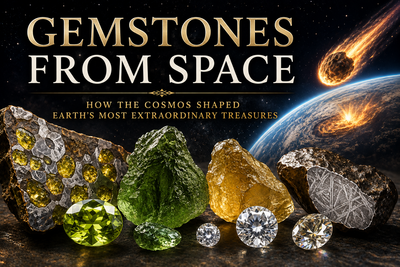
Gemstones From Space: How the Cosmos Shaped Earth's Most Extraordinary Treasures
Gallery Gems on 1st Aug 2026
Every gemstone tells a story.
Most begin their journey deep beneath Earth's surface, forged by immense heat, crushing pressure, and millions—sometimes billions—of years of geological activity. They remain hidden within our planet until volcanic eruptions, mountain building, or erosion finally reveal them to the world.
But a select few have a far more extraordinary story.
Some formed inside ancient asteroids before Earth itself was fully formed. Others were created in the violent instant when massive space rocks collided with our planet. A handful even traveled millions of miles through space before arriving here as meteorites.
These remarkable materials blur the line between geology and astronomy, reminding us that Earth's story has always been connected to something much larger.
When Space Meets Earth
Every day, Earth is showered with material from space.
Most of it arrives as microscopic dust that burns harmlessly in our atmosphere. Occasionally, however, larger objects survive their fiery descent and reach Earth's surface.
To understand these cosmic visitors, it helps to know the difference between a few important terms.
Asteroids are rocky or metallic bodies that orbit the Sun, primarily between Mars and Jupiter. Many are leftovers from the birth of our Solar System over 4.5 billion years ago.
When pieces of these asteroids survive their journey through Earth's atmosphere and land on the ground, they become meteorites—some of the oldest physical objects scientists have ever studied.
Comets are different. Often described as "dirty snowballs," they consist largely of ice, frozen gases, dust, and rock. As they approach the Sun, those frozen materials vaporize, creating the spectacular glowing tails that have fascinated people throughout history.
For collectors, meteorites are more than unusual rocks. They are genuine samples of other worlds, preserving minerals and chemical signatures that formed long before modern Earth existed.
Peridot: A Gem from Earth's Mantle... and Beyond
Most peridot forms deep within Earth's upper mantle before volcanic activity carries it toward the surface.
But Earth isn't the only place where this beautiful green gemstone exists.
Rare meteorites known as pallasites contain transparent crystals of olivine—the very same mineral gemologists know as peridot.
This makes peridot one of the few gemstones with both a terrestrial and extraterrestrial connection.
Some of these crystals may even be older than Earth itself, having formed inside ancient planetary bodies during the earliest days of our Solar System.
Peridot's story is far richer than most people realize. If you'd like to explore this remarkable gemstone in greater depth, read our complete guide, Peridot: Cleopatra's Green Gem, Born in Volcanoes and Found in Meteorites, where we uncover its volcanic origins, ancient history, famous localities, and the extraordinary connection that makes it one of the very few gemstones linked to both Earth and outer space.
Pallasites: Among the Most Beautiful Meteorites Ever Found
If there were a contest for the world's most beautiful meteorite, pallasites would almost certainly be among the finalists.
Imagine translucent golden-green peridot crystals suspended within a polished framework of iron and nickel. When cut and illuminated, they appear almost otherworldly.
Scientists believe pallasites formed near the boundary between the metallic cores and rocky mantles of small ancient planets. Catastrophic collisions shattered those worlds billions of years ago, scattering fragments throughout space.
A tiny number eventually found their way to Earth.
Holding a pallasite is like holding a cross-section of a world that no longer exists. 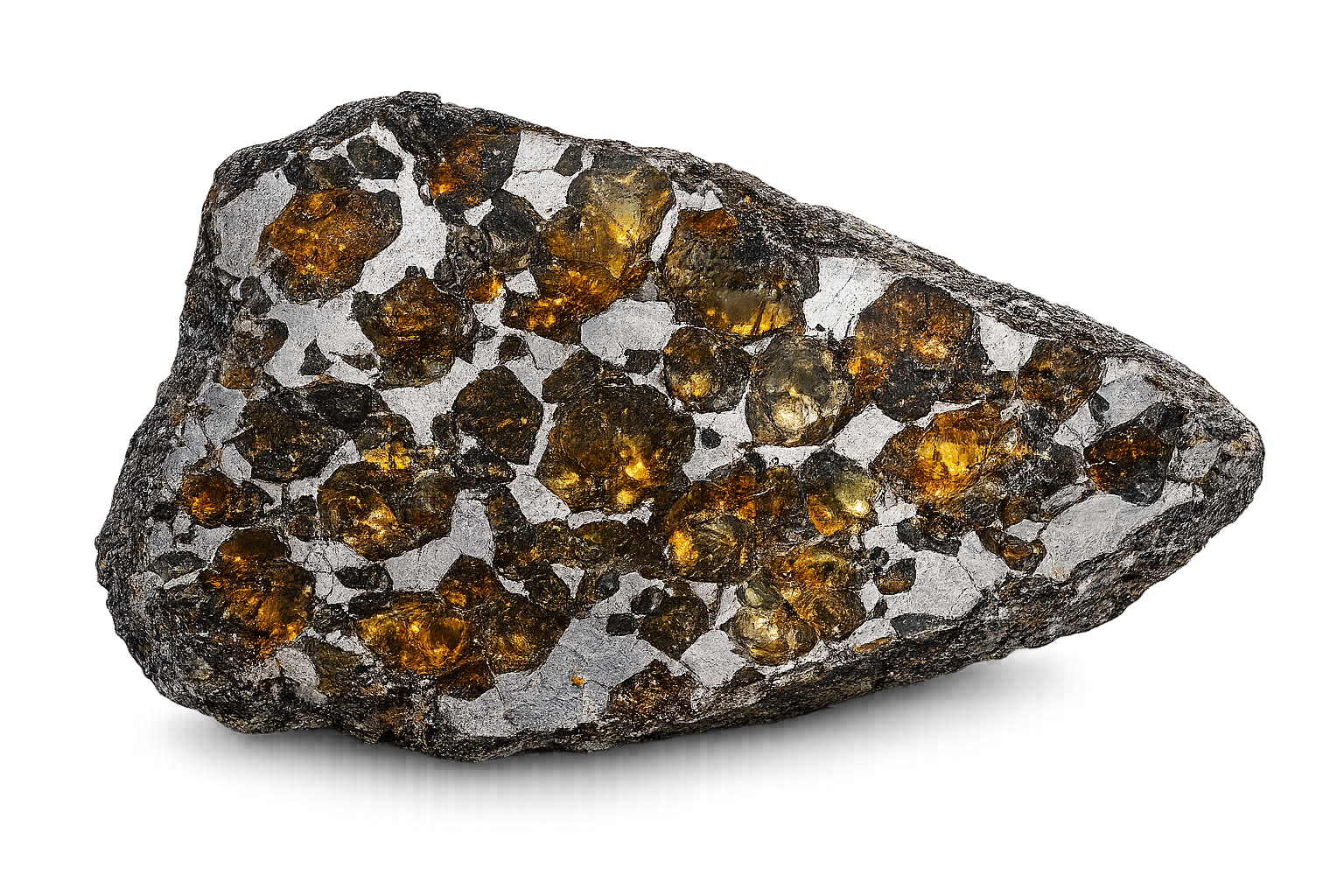
Moldavite: Born from Catastrophe
Not every space-related gemstone actually comes from space.
Some are created when space collides with Earth.
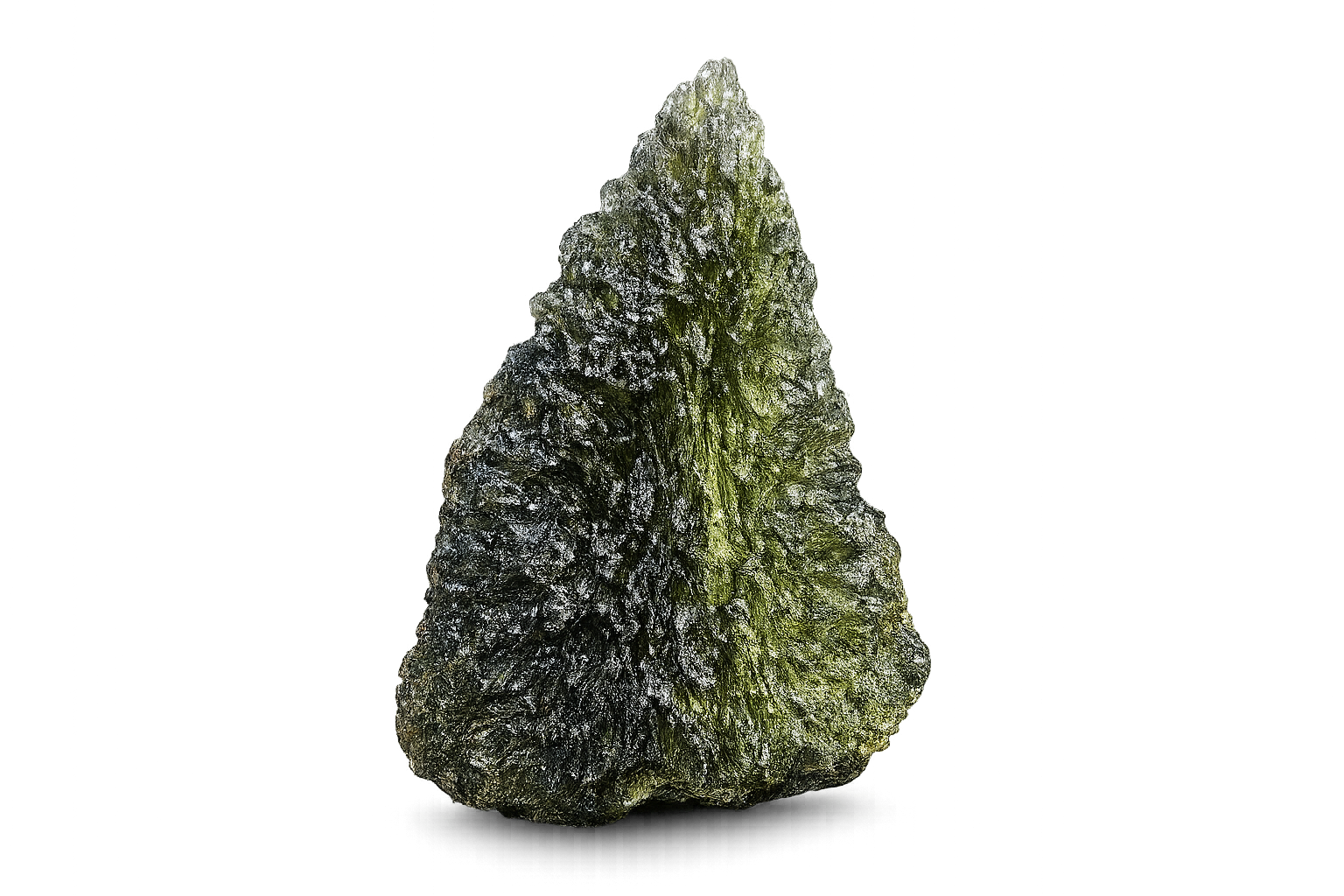
Around 15 million years ago, a massive asteroid struck what is now southern Germany. The impact was so powerful that molten rock was blasted high into the atmosphere before cooling into a translucent green natural glass known as Moldavite, found primarily in the Czech Republic.
Its flowing shapes, etched surfaces, and unmistakable green color have made moldavite one of the most sought-after impact materials among collectors.
Libyan Desert Glass: A Treasure of the Pharaohs
Scattered across Egypt's Sahara Desert lies another remarkable impact-related material.
Libyan Desert Glass is an unusually pure natural silica glass ranging from pale yellow to rich golden hues. While scientists continue to study its exact origin, most evidence points to an ancient impact event or atmospheric explosion.
Its history became even more remarkable when archaeologists discovered that a carved scarab made from Libyan Desert Glass was placed in the burial jewelry of King Tutankhamun.
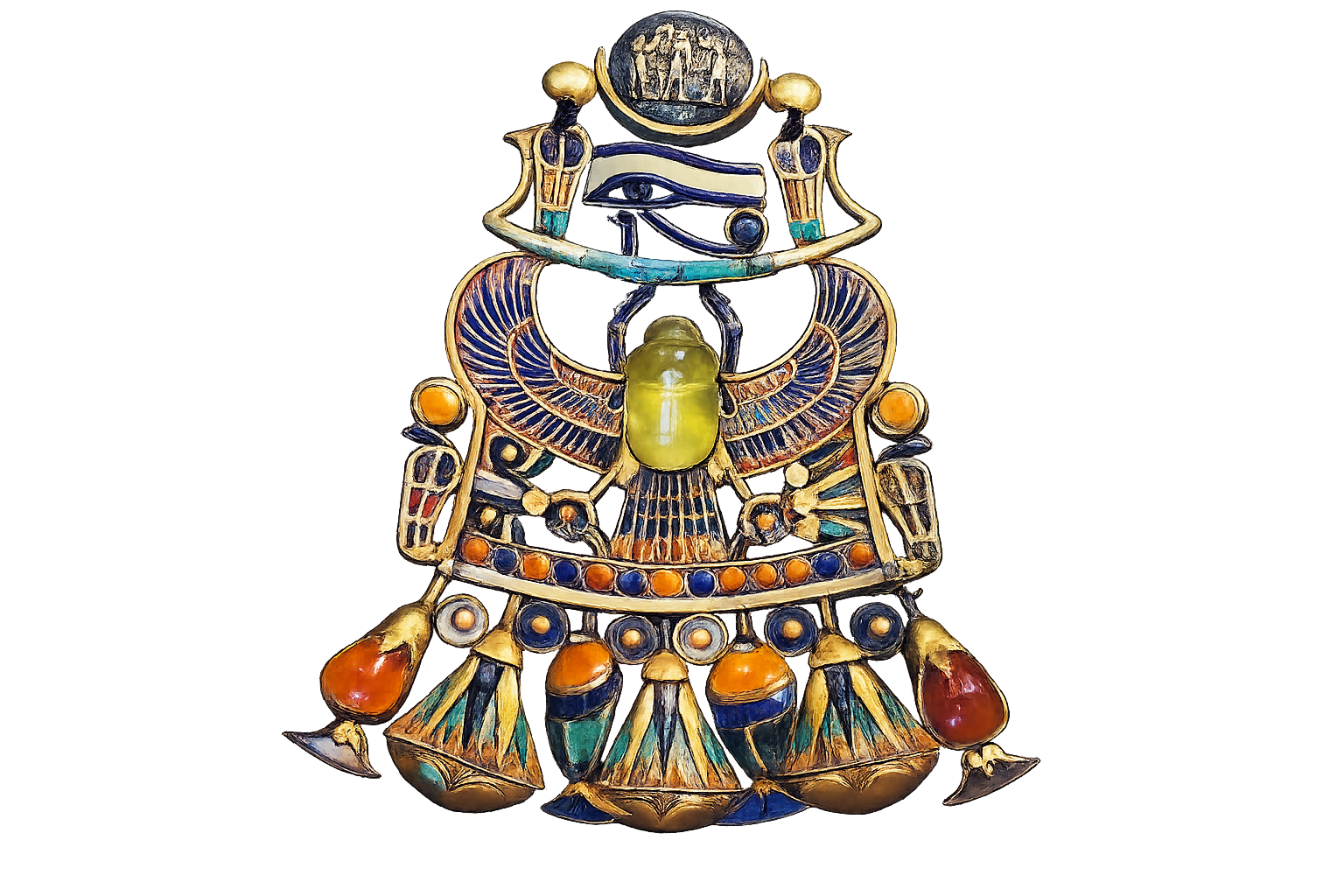
Few gemstones can claim a connection to both cosmic events and one of history's most famous pharaohs.
Tektites: Earth's Natural Impact Glass
Moldavite is just one member of a larger family known as tektites.
When large impacts occur, molten material can be launched hundreds—or even thousands—of miles through Earth's atmosphere before cooling into natural glass.
Other famous tektites include:
- Australites
- Indochinites
- Georgiaites
- Bediasites
Each records one of the most energetic events our planet has ever experienced.
Diamonds Born in an Instant
Most diamonds spend billions of years forming deep within Earth's mantle.
Some form almost instantly.
When enormous asteroids strike Earth, the incredible shock pressures generated during impact can briefly exceed those found naturally within the mantle, transforming carbon into microscopic diamonds.
Famous impact structures such as Russia's Popigai Crater contain vast quantities of these impact-created diamonds, providing scientists with remarkable insight into extreme geological processes.
Visitors from the Moon and Mars
Not every meteorite comes from an asteroid.
Some come from planets.
Powerful impacts on the Moon or Mars have blasted rock into space, where fragments drifted for millions of years before eventually reaching Earth.
These lunar and Martian meteorites are among the rarest geological specimens collectors can own.
While they aren't gemstones, they provide an extraordinary glimpse into worlds beyond our own.
Moissanite: The Gem with a Cosmic Beginning
One of the most fascinating stories in gemology begins inside a meteorite.
In 1893, French chemist Henri Moissan examined fragments of Arizona's Canyon Diablo meteorite and discovered tiny crystals of silicon carbide. At first, they were mistaken for diamonds before later being recognized as an entirely new mineral species.
That mineral would eventually bear his name—moissanite.
Natural moissanite is extraordinarily rare on Earth, making jewelry-quality natural specimens virtually nonexistent. The beautiful moissanite used in jewelry today is laboratory-created, allowing people to enjoy one of the most brilliant gem materials ever discovered.
Stardust: The Connection We All Share
While only a handful of gemstones have a direct connection to meteorites or asteroid impacts, every gemstone shares an even greater story.
Long before Earth existed, ancient stars forged the elements that make up our universe. The carbon in diamonds, the chromium that colors emeralds, the aluminum found in sapphires and rubies, and the silicon within quartz were all created inside stars that lived and died billions of years before our Solar System formed.
When those stars scattered their elements across space, they provided the building blocks for planets, minerals, and ultimately every gemstone we treasure today.
In that sense, every gemstone carries a small piece of the universe within it.
The Gallery Gems Perspective
Few subjects capture the wonder of gemology quite like the connection between gemstones and outer space.
Whether it's a pallasite preserving ancient peridot, moldavite forged by an asteroid impact, Libyan Desert Glass treasured by pharaohs, or the discovery of moissanite inside a meteorite, these extraordinary materials remind us that Earth's geological story has never existed in isolation.
Some of the most fascinating treasures in any collection have traveled farther—and endured more—than we can truly imagine.
FAQ: Gemstones From Space
Can gemstones really come from outer space?
Yes. While most gemstones form within Earth, some have direct extraterrestrial connections. Peridot occurs inside rare pallasite meteorites, tiny diamonds have been found in meteorites, and moissanite was first identified in meteorite material.
Is meteorite jewelry made from real meteorites?
Often, yes. Many meteorite rings and pendants use genuine iron meteorites such as Gibeon or Muonionalusta. Their distinctive Widmanstätten pattern makes them instantly recognizable.
Can peridot really come from space?
Most peridot forms within Earth's mantle, but rare pallasite meteorites contain gem-quality olivine—the same mineral species known as peridot.
Is moldavite a gemstone or glass?
Moldavite is a natural impact glass, or tektite, created when an asteroid impact melted Earth's surface and launched molten material into the atmosphere.
What is Libyan Desert Glass?
Libyan Desert Glass is a naturally occurring silica glass found in the Sahara Desert. It is widely believed to have formed during an ancient impact event and is famous for its use in King Tutankhamun's burial jewelry.
Was moissanite first discovered in a meteorite?
Yes. Henri Moissan first identified microscopic silicon carbide crystals inside Arizona's Canyon Diablo meteorite in 1893.
Can diamonds form during asteroid impacts?
Yes. The immense pressures generated during major impacts can transform carbon into microscopic diamonds known as impact diamonds.
Can I own a meteorite?
Absolutely. Many meteorites are legally bought and sold, making them popular additions to mineral collections, educational displays, and even fine jewelry.
Final Thoughts
Long before humanity looked toward the stars, pieces of the cosmos were already finding their way to Earth.
Some became scientific treasures.
Others became prized collector specimens.
A remarkable few became gemstones unlike anything else found in nature.
From peridot preserved within ancient meteorites to moldavite born from catastrophic impacts, Libyan Desert Glass treasured by pharaohs, microscopic extraterrestrial diamonds, and the remarkable discovery of moissanite, these materials reveal just how closely geology and astronomy are connected.
And while only a select few gemstones have a direct extraterrestrial origin, every gem on Earth shares an even deeper connection.
Perhaps that's the greatest perspective gemology can offer.
When you hold a gemstone, you're not simply holding a piece of Earth.
You're holding a tiny piece of the universe's history.