
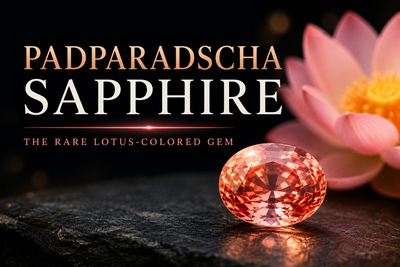
Padparadscha Sapphire: September's Rare Lotus-Colored Gem
Gallery Gems on 1st Sep 2026
September may be known for blue sapphire, but sapphire has never been a one-color gemstone.
Among its pinks, yellows, greens, oranges and purples is one particularly rare color that doesn't even go by a simple color name: Padparadscha.
These unusual sapphires blend pink and orange into colors often compared to peach, salmon, sunrise and sunset. But the comparison that stuck came from the lotus blossom—and gave us one of the strangest names in the gemstone world.
Padparadscha is beautiful, rare, valuable, frequently mispronounced and sometimes even debated among gemologists.
That's plenty of reason to give it its own September spotlight.
What's With the Name? 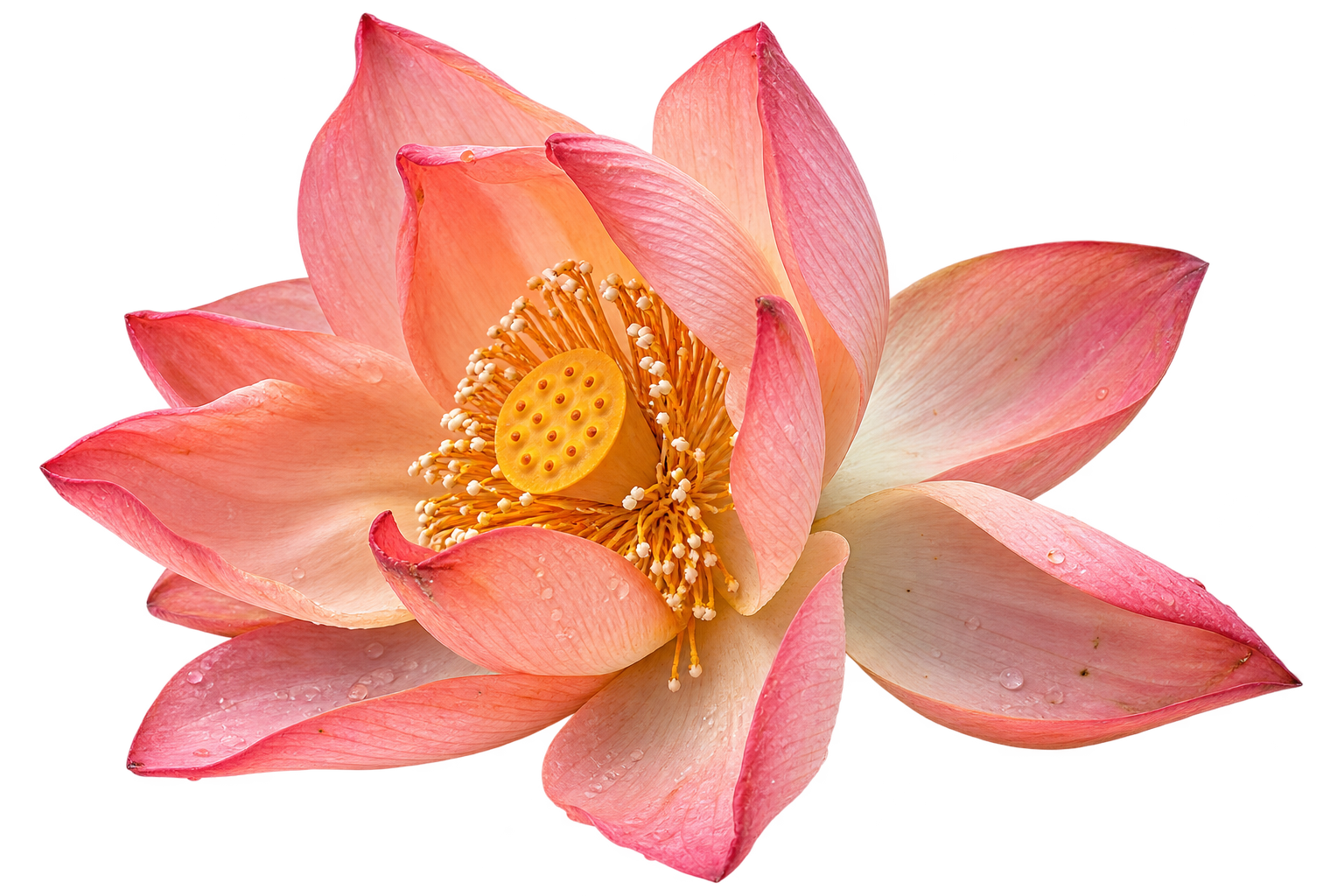
Padparadscha is commonly pronounced something close to pad-pah-RAHD-shah.
The name has historic roots associated with the color of a lotus blossom and is closely connected with Sri Lanka, formerly Ceylon, the traditional home of these sapphires.
Rather than being simply pink or orange, fine Padparadscha combines the two—something people have compared to the warm colors found within a lotus flower.
Most sapphire colors are wonderfully straightforward: blue sapphire, pink sapphire, yellow sapphire, green sapphire.
Padparadscha walked in and demanded its own introduction.
FUN GEM FACT: The unusual name hasn't always had fans. Some early gemologists hoped the term would eventually disappear from gemological vocabulary.
More than 80 years later, it has instead become one of sapphire's most prestigious color names.
So much for that prediction.
What Exactly Is a Padparadscha?
Underneath the exotic name, Padparadscha is still sapphire.
It belongs to the mineral species corundum, primarily aluminum oxide (Al₂O₃), and has the same excellent Mohs hardness of 9 as other sapphires.
Its rarity comes from color. Padparadscha generally falls into a delicate range of pinkish orange to orangey pink.
That's also why not every peach sapphire is Padparadscha.
Peach sapphire is a much broader color description. Padparadscha occupies a narrower range, and respected gemological laboratories use established criteria when deciding whether the name belongs on a report.
A seller typing Padparadscha into a product title doesn't automatically make it one.
From Sri Lanka to the World
Padparadscha is historically associated with Sri Lanka, one of the oldest sapphire-producing regions on Earth.
Sri Lanka has supplied gemstones for more than 2,000 years, with famous mining areas around Ratnapura producing sapphire alongside spinel, chrysoberyl, garnet and other gems.
Many Sri Lankan gemstones are recovered from ancient gem-bearing gravels rather than mined directly from solid rock. Among the island's many sapphire colors, nature occasionally produces that rare combination of pink and orange.
Today, Padparadscha-quality sapphires have also been found outside Sri Lanka, including Madagascar, Tanzania and Vietnam.
So no—a Padparadscha doesn't technically have to come from Sri Lanka.
But Sri Lanka will probably always be the place most closely connected to its history.
Why Is Padparadscha So Rare?
Nature is being asked to get several things right at once.
The sapphire needs an attractive balance of pink and orange, good transparency, pleasing tone and saturation, enough clarity, and enough usable rough to cut a beautiful gemstone.
Then we'd preferably like it larger than a breadcrumb.
That's where things become difficult.
Fine Padparadscha becomes increasingly scarce as size and quality increase, and exceptional unheated stones weighing several carats can become serious collector gems.
What Is Padparadscha Worth?
There isn't a useful single “Padparadscha price per carat.”
A stone's color, size, clarity, cut, treatment, origin and laboratory documentation can all dramatically affect value.
Fine natural stones with no evidence of heat treatment generally command the greatest premiums, particularly when they combine desirable color with significant size.
At the exceptional end of the market, we're talking serious money. A 9.26-carat unheated Ceylon Padparadscha sapphire offered by Sotheby's in 2023 carried an estimate of $300,000–$500,000.
That's certainly not what every Padparadscha costs—but it shows just how highly exceptional examples can be regarded.
Here's Where Padparadscha Gets Weird
Some sapphires don't always keep exactly the same apparent color.
Certain stones contain unstable color centers that can respond to light. UV-containing light can strengthen yellow or orange components in some sapphires, while those colors may diminish under different conditions.
That's particularly important with Padparadscha, where a little extra orange can make a very big difference.
Gem laboratories may therefore perform color-stability testing when determining whether a sapphire qualifies for the Padparadscha designation.
In other words, sometimes gemologists actually have to wait and see what color the sapphire decides to be.
Gemstones are wonderfully inconvenient like that.
The Beryllium Plot Twist
Around 2001, unusually large numbers of attractive pink-orange sapphires began appearing in the market.
For something supposedly very rare, there suddenly seemed to be an awful lot of them.
Researchers eventually discovered that many had undergone beryllium lattice diffusion. During extreme heat treatment, beryllium could enter the sapphire and create yellow-to-orange coloration.
Start with a pink sapphire, add an orange component and...
You can see the problem.
These treated stones could closely resemble naturally colored Padparadscha sapphire, and identifying the treatment pushed gem laboratories toward increasingly sophisticated chemical analysis.
Nature hadn't suddenly become unusually generous.
Humans had figured out another way to cook rocks.
Natural, Heated or Lab-Created?
All three exist, and they aren't interchangeable.
A natural unheated Padparadscha formed in the earth and shows no evidence of heat treatment.
A heated natural sapphire still formed naturally; heat was later used to modify its appearance. Heat treatment is common in sapphire and should be disclosed.
Diffusion treatment goes further by introducing elements to modify color.
And lab-created Padparadscha-color sapphire is synthetic corundum grown by people rather than nature.
Lab-created sapphire can be beautiful, durable and chemically sapphire. What it doesn't have is the geological rarity responsible for the extraordinary value of fine natural Padparadscha.
Disclosure makes all the difference.
Padparadscha Is Still a September Birthstone
Blue gets the traditional September birthstone spotlight, but sapphire doesn't suddenly stop being sapphire because it changed clothes.
Padparadscha is every bit as much a September birthstone as blue sapphire.
And with a Mohs hardness of 9, it also has the durability that makes sapphire such an excellent choice for rings and frequently worn jewelry.
For someone who wants a September birthstone without traditional blue, it's hard to find a more unusual option.
Quick Padparadscha Facts
Gemstone: Sapphire
Mineral: Corundum
Composition: Al₂O₃
Color: Pinkish orange to orangey pink
Hardness: 9 Mohs
Historic source: Sri Lanka
Other sources: Madagascar, Tanzania, Vietnam and others
Birthstone: September
Treatments: Heat and diffusion treatments may occur
Lab-created: Yes
Name inspiration: Lotus blossom
Easy to spell: Absolutely not.
Buying a Padparadscha
The first rule is surprisingly simple:
Actually like the gemstone.
Don't become so obsessed with getting the Padparadscha name that you overlook a prettier pink, peach or orange sapphire sitting beside it.
Look for attractive color, good brightness, pleasing cutting and acceptable clarity. Ask about treatments and origin claims.
And when a natural Padparadscha carries a serious price tag, an independent laboratory report becomes especially important.
Color descriptions are easy to type.
Rarity is considerably harder to fake under proper testing.
Gallery Gems Perspective
Padparadscha is a great example of why the gemstone world gets more interesting the deeper you look.
At first, it's simply a pretty pink-orange sapphire.
Then you discover an ancient Sri Lankan connection, a name borrowed from a lotus, a color gemologists have debated for generations, sapphires that can respond to light, a modern diffusion-treatment mystery and natural stones valuable enough to reach six figures.
All hiding inside one unusual corner of the sapphire family.
Blue sapphire may always be September's icon.
But every once in a while, nature trades the royal blue for pink and orange and gives us something much less common.
A lotus among sapphires.
Frequently Asked Questions
What is Padparadscha sapphire?
Padparadscha is a rare pinkish-orange to orangey-pink variety of sapphire historically associated with Sri Lanka.
What does Padparadscha mean?
The name is historically connected with the color of a lotus blossom.
Is peach sapphire the same as Padparadscha?
No. Peach sapphire describes a broader range of sapphire colors. Not every peach-colored sapphire meets Padparadscha criteria.
Is Padparadscha rare?
Fine natural Padparadscha is among the rarer sapphire color varieties, particularly in larger sizes and exceptional quality.
Does Padparadscha have to come from Sri Lanka?
No. Sri Lanka is its historic source, but Padparadscha-quality sapphires have also been found elsewhere.
Is Padparadscha a September birthstone?
Yes. Padparadscha is sapphire, making it one of the more unusual choices for a September birthstone.
Can Padparadscha be lab-created?
Yes. Synthetic sapphire can be grown in Padparadscha-like colors, but it doesn't possess the geological rarity of natural material.
Is Padparadscha good for rings?
Yes. Sapphire's Mohs hardness of 9 makes it an excellent gemstone for frequently worn jewelry, including engagement rings.