
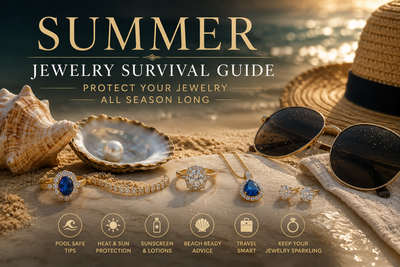
Summer Jewelry Survival Guide: Protect Your Jewelry During the Hottest Season
Gallery Gems on 30th Jun 2026
Summer is made for vacations, pool days, beach trips, backyard barbecues, and outdoor adventures—but it can also be one of the toughest seasons for fine jewelry. Chlorine, saltwater, sunscreen, sand, sweat, and extreme heat can all affect gemstones and precious metals in different ways.
Fortunately, protecting your favorite jewelry doesn't require much effort. A few simple habits can help keep your rings, necklaces, bracelets, and earrings looking beautiful all summer long.
Why Summer Can Be Hard on Jewelry
Fine jewelry is designed to be worn and enjoyed, but summer introduces conditions that many gemstones and metals don't encounter during the rest of the year.
Heat can affect certain treated gemstones, lotions leave residue that dulls sparkle, pools introduce harsh chemicals, and beach sand can scratch softer materials. Even something as simple as swimming can increase the risk of losing a ring as cool water causes fingers to shrink.
Understanding these seasonal risks helps you enjoy your jewelry while keeping it in excellent condition.
Before You Jump In: Pools, Lakes & The Ocean
Swimming is one of summer's greatest pleasures, but it's often best enjoyed without your jewelry.
Chlorinated pools can gradually affect precious metals and finishes over time, while saltwater leaves mineral deposits that dull shine. Cold water can also cause rings to loosen unexpectedly, making them surprisingly easy to lose.
Hot tubs deserve special mention, as the combination of heat and chemicals makes them one of the harshest environments for fine jewelry.
Sunscreen, Lotion & Bug Spray
Summer skincare products protect you—but not necessarily your jewelry.
Lotions, sunscreen, body oils, and insect repellents can leave a cloudy film on gemstones, reducing brilliance until properly cleaned.
Pearls are especially sensitive because their nacre can be affected by repeated exposure to cosmetics and chemicals.
A simple habit makes all the difference: apply skincare products first, allow them to absorb, then put your jewelry on.
Sand Isn't as Gentle as It Looks
Many beachgoers don't realize that sand often contains quartz, a mineral capable of scratching softer gemstones and slowly wearing polished metal finishes.
Beach towels, sand volleyball, and digging for shells also increase the chances of accidentally losing jewelry.
If you're planning an active day on the beach, leaving valuable jewelry safely behind is often the smartest choice.
Heat & Direct Sunlight
Most gemstones tolerate normal summer temperatures well, but prolonged exposure to excessive heat isn't ideal.
Leaving jewelry on a car dashboard, windowsill, or poolside chair in direct sunlight can expose it to temperatures far beyond normal wearing conditions.
Certain gemstones may gradually fade after extended UV exposure, while assembled stones such as doublets and triplets rely on specialized adhesives that don't appreciate excessive heat.
Sweat, Sports & Summer Activities
Sweat alone rarely damages jewelry, but combined with sunscreen, dust, and everyday grime it can leave pieces looking noticeably dull.
Outdoor workouts, gardening, hiking, moving furniture, weightlifting, and home improvement projects also increase the risk of scratches, bent prongs, and accidental impacts.
Removing jewelry before strenuous activities is often the easiest way to prevent unnecessary wear.
Cleaning Your Jewelry After Summer Adventures
Most jewelry benefits from an occasional gentle cleaning using warm water, mild dish soap, and a soft brush.
However, not every gemstone should be treated the same.
Pearls, opals, turquoise, coral, amber, and assembled gemstones require gentler care than diamonds, sapphires, or rubies.
When you're unsure, always follow the care recommendations for your specific gemstone.
Travel Smart With Your Jewelry
Summer vacations are also prime time for misplaced jewelry.
Packing pieces individually in a dedicated jewelry travel case helps prevent scratches and tangled chains. Valuable jewelry should always travel in your carry-on luggage rather than checked baggage whenever possible.
A few extra moments spent organizing your jewelry before leaving home can prevent a stressful search later.
Final Thoughts
Summer is meant to be enjoyed, and so is your jewelry.
With a little extra awareness around swimming, sunscreen, heat, and outdoor activities, you can wear your favorite pieces with confidence while helping them remain beautiful for years to come.
Fine jewelry is made to celebrate life's moments—not sit hidden away in a jewelry box. A little seasonal care simply helps ensure those moments continue for many summers to come.
FAQ: Summer Jewelry Care
Can I wear jewelry in a swimming pool?
It's best to remove jewelry before swimming. Chlorine, chemicals, and the risk of rings slipping off in cool water make pools one of the easiest places to lose or damage jewelry.
Is it okay to wear jewelry at the beach?
Yes, but be mindful of sand, saltwater, and the increased chance of losing jewelry during beach activities. Consider leaving sentimental or valuable pieces at home.
Does sunscreen damage jewelry?
Sunscreen usually won't permanently damage most gemstones, but it can leave a dull film that reduces sparkle until the jewelry is cleaned. Pearls are more sensitive and should be kept away from lotions and cosmetics whenever possible.
Which gemstones are best for everyday summer wear?
Diamonds, sapphires, rubies, spinels, and chrysoberyl are among the most durable choices for everyday summer activities.
Should I remove my jewelry before working out?
Yes. Weightlifting, sports, gardening, and home improvement projects all increase the risk of scratching gemstones, bending rings, or damaging prongs.
Related Reading
If you enjoyed this guide, you may also like our articles on Pearls, Opals, Emeralds, and Ruby, where we take a deeper look at the fascinating characteristics and care requirements of individual gemstones.